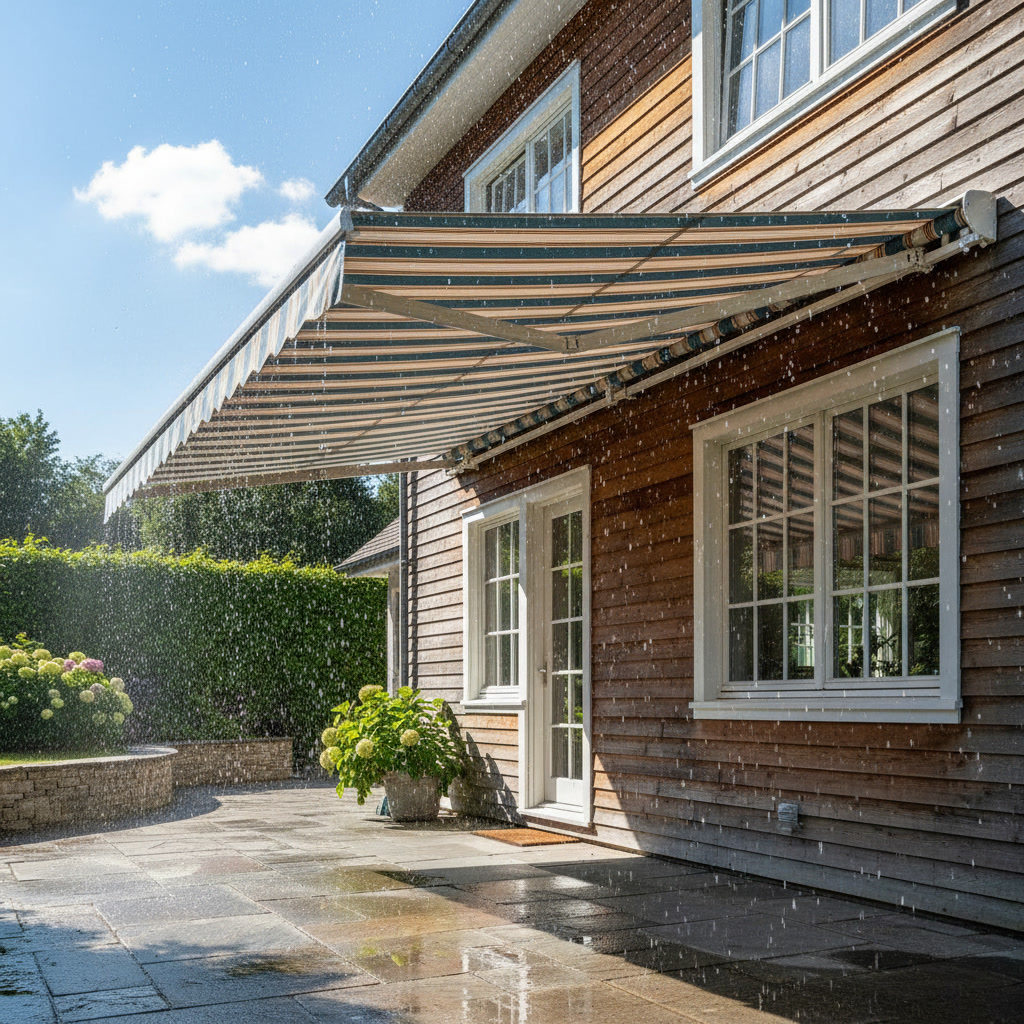
When comparing aluminum vs fabric awning options, aluminum typically lasts 20 to 30 years with minimal maintenance, while fabric awnings generally need replacement every 5 to 15 years depending on material quality and climate exposure. Aluminum provides superior wind resistance and handles ice, hail, and UV exposure better than most fabric materials. However, fabric awnings offer flexibility during severe weather events and can be more forgiving in storm conditions when properly retracted.
Why Awning Material Choice Matters in Arkansas
Arkansas weather puts outdoor structures through extreme tests. Summer temperatures regularly exceed 95 degrees, winter ice storms can coat surfaces for days, and spring brings severe thunderstorms with high winds and hail. Your awning choice determines whether you’ll enjoy decades of shade and protection or face frequent repairs and replacements.
The material you select affects more than just longevity. It influences your home’s energy efficiency, curb appeal, maintenance schedule, and total cost of ownership. A poorly matched awning can fail within a single severe weather season, while the right choice becomes a permanent asset to your property.
How Aluminum Awnings Handle Extreme Weather
Aluminum awnings resist weather damage through their solid construction and protective coatings. Modern aluminum awnings feature baked-on enamel finishes that prevent rust and corrosion, even during prolonged exposure to rain and humidity. The metal surface sheds water immediately, preventing moisture accumulation that leads to mold or structural weakening.
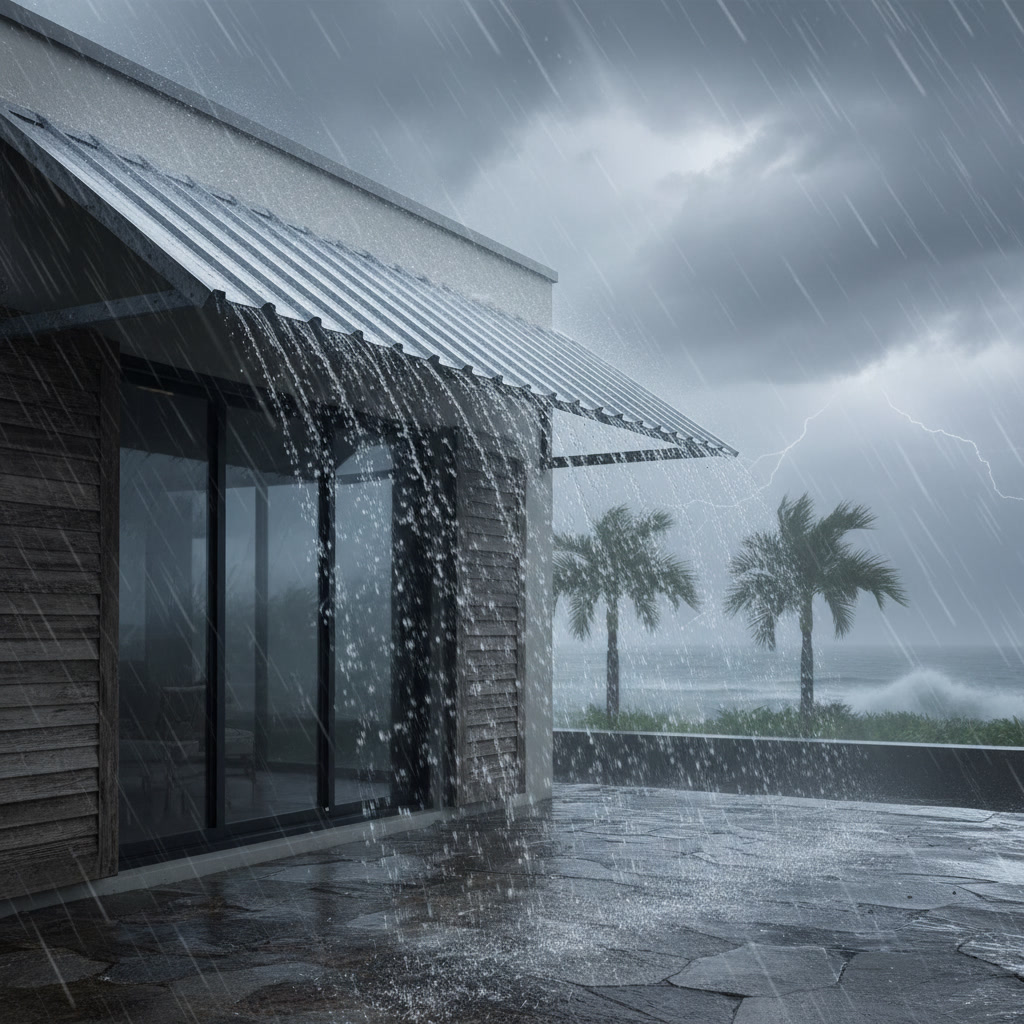
Wind resistance stands out as aluminum’s strongest advantage. Properly installed aluminum awnings can withstand sustained winds of 60 to 80 mph when secured to solid structural supports. The rigid panels don’t flap or tear like fabric, eliminating the most common failure point during storms. Ice and snow slide off the smooth metal surface more readily than fabric, reducing winter load concerns.
Hail poses less risk to aluminum than you might expect. While large hailstones can dent the surface, the structural integrity remains intact. Small dents rarely affect function, and severe damage from softball-sized hail would likely destroy fabric awnings completely. UV radiation causes no degradation to aluminum, unlike fabric that gradually weakens under constant sun exposure.
Fabric Awning Performance in Challenging Conditions
Quality fabric awnings use solution-dyed acrylic, vinyl-coated polyester, or marine-grade canvas treated for weather resistance. Solution-dyed acrylic represents the premium choice, with color embedded throughout the fiber rather than applied as a coating. This construction prevents fading for 7 to 10 years in direct sunlight, compared to 3 to 5 years for lower-grade materials.
Water resistance varies dramatically by fabric type. Vinyl-coated materials repel water completely but trap heat and can crack in freezing temperatures. Acrylic fabrics allow slight water penetration while providing better breathability and temperature regulation. Most quality fabrics include water-repellent treatments that need reapplication every few years to maintain effectiveness.
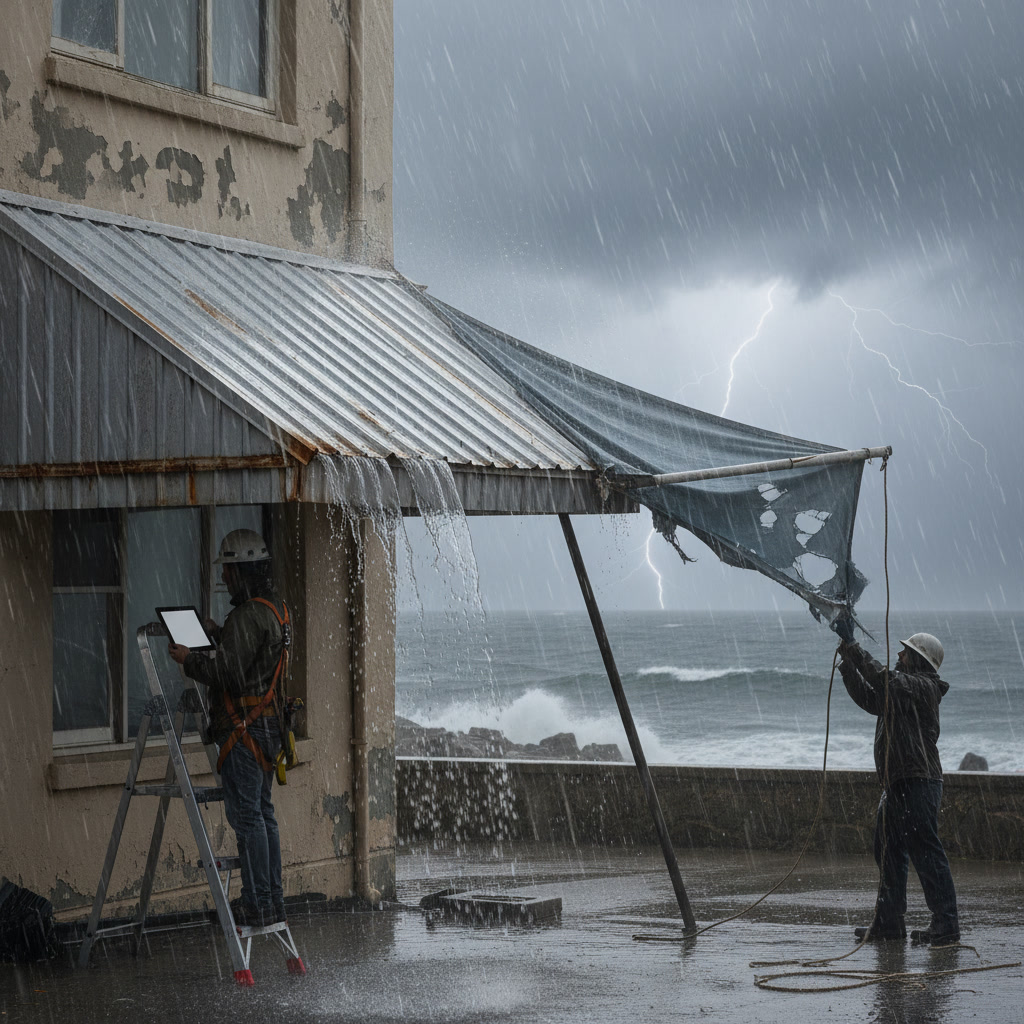
Wind presents the greatest risk to fabric awnings. Even heavy-duty fabrics will tear or separate from frames in winds exceeding 40 mph if left extended. Retractable fabric awnings solve this problem by allowing you to pull in the covering before severe weather arrives. Fixed fabric awnings require reinforced frames and professional installation to survive occasional high winds without damage.
Comparing Lifespan by Climate Zone in Herber Springs
Central Arkansas experiences a humid subtropical climate with weather extremes that accelerate awning aging. In this environment, aluminum awnings from Herber Springs Awning and Home Improvements routinely last 25 years or longer with basic cleaning twice yearly. The stable structure handles temperature swings from below freezing to over 100 degrees without warping or losing shape.
Fabric awnings face shorter lifespans in the same conditions. Premium solution-dyed acrylic lasts 10 to 15 years when properly maintained and retracted during severe weather. Mid-grade materials typically need replacement after 7 to 10 years. Vinyl-coated fabrics often show cracking and discoloration within 5 to 7 years due to temperature cycling and UV exposure.
The key difference emerges in maintenance requirements. Aluminum needs occasional washing and inspection of mounting hardware. Fabric demands regular cleaning, treatment reapplication, and careful monitoring for tears, mold, or structural stress. Each maintenance task you skip accelerates fabric deterioration, while aluminum forgives neglect far more readily.
Durability Factors Beyond Material Type
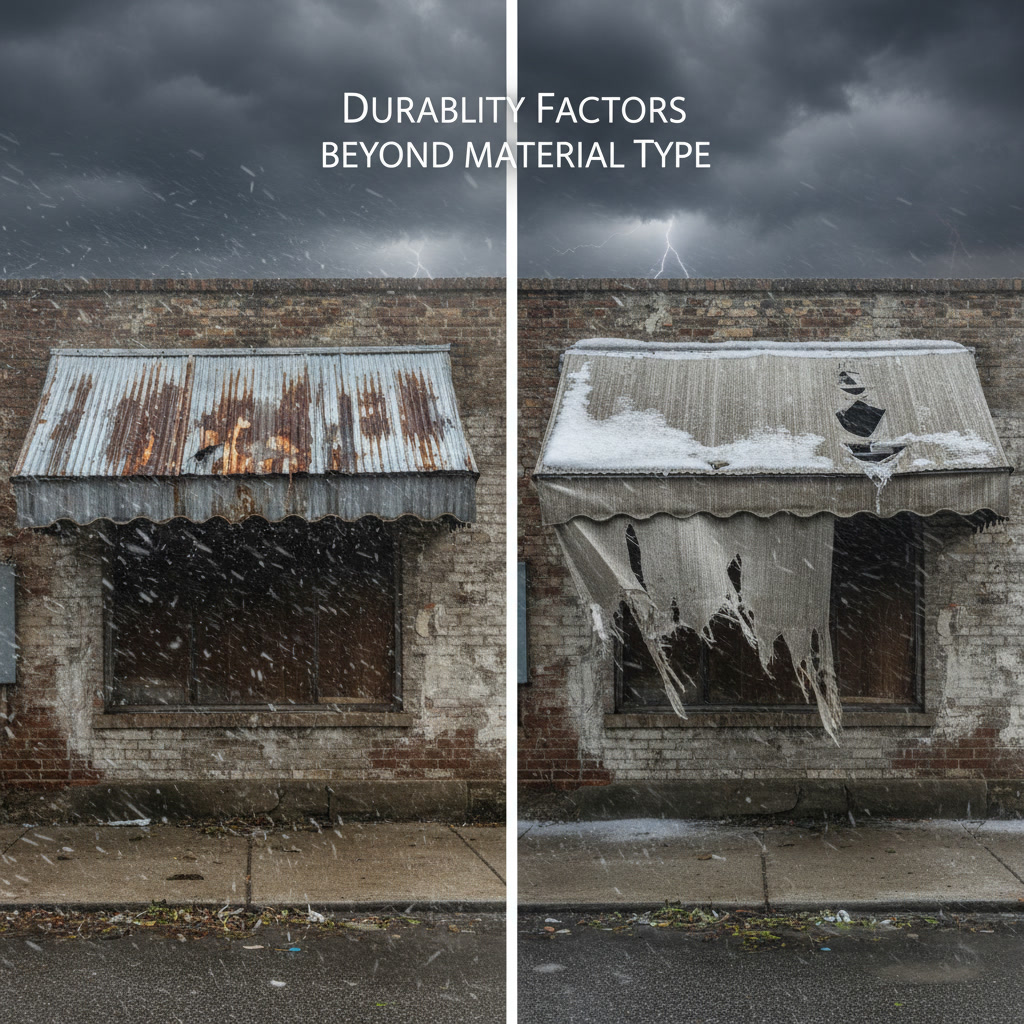
Installation quality affects lifespan as much as material choice. An aluminum awning attached to weak fascia boards or undersized brackets will fail regardless of the metal’s inherent strength. Similarly, fabric stretched too tightly will tear at stress points, while loose fabric will flap destructively in moderate winds.
Frame construction matters equally for both types. Aluminum awnings need 12-gauge or heavier frames for permanent installations, with mounting points spaced no more than 48 inches apart. Fabric awnings require adjustable tension systems that accommodate seasonal expansion and contraction without overstressing seams or attachment points.
Slope and drainage design prevent premature failure in both materials. Awnings need at least a 3-inch drop per linear foot to shed water effectively. Flat or insufficiently sloped designs allow water pooling that stresses fabric and promotes corrosion in aluminum frames. Proper slope also prevents snow accumulation that can collapse structures during winter storms.
Maintenance Requirements That Extend Service Life
Aluminum awning maintenance involves washing with mild soap and water twice yearly to remove pollen, dirt, and organic debris. Inspect mounting hardware annually and tighten any loose bolts before they create stress cracks in attachment points. Check for paint chips or scratches that expose bare metal, then touch up with matching enamel to prevent corrosion from spreading.
Fabric awnings need more frequent attention. Brush off loose debris monthly and wash with specialized fabric cleaner every three months to prevent mold growth in humid conditions. Reapply water-repellent treatment annually or when you notice water soaking in rather than beading up. Inspect stitching and seams twice yearly for signs of stress or separation.
Retractable awnings of either material require additional care. Lubricate mechanical components annually and test operation monthly to catch problems early. Never retract wet fabric, as moisture trapped in the rolled position promotes mold and mildew that rapidly destroy the material. This single mistake causes more premature fabric failures than any weather event.
Cost Analysis Over the Product Lifetime
Initial investment for aluminum awnings typically runs 40 to 60 percent higher than comparable fabric installations. A standard 12-foot by 10-foot aluminum awning costs between $1,800 and $3,200 installed, while quality fabric versions range from $1,200 to $2,000. However, the total cost picture changes dramatically when you factor in replacement cycles.
Over a 25-year period, you’ll likely replace fabric awnings two to four times depending on material grade and maintenance diligence. Each replacement includes removal and disposal costs plus new installation labor. The cumulative expense often exceeds the aluminum option by 30 to 50 percent, even before accounting for the higher maintenance costs fabric requires.
Energy savings also favor aluminum in many applications. Reflective metal surfaces bounce heat away from windows and walls more effectively than absorbent fabrics, reducing cooling costs by 15 to 25 percent in south-facing installations. This advantage compounds over decades, adding hundreds of dollars in value beyond the physical structure itself. Similar considerations apply to other outdoor remodeling projects that improve your home’s efficiency.
When Fabric Makes More Sense Than Aluminum
Fabric awnings excel in situations requiring seasonal adjustment or temporary coverage. Retractable fabric units allow you to capture winter sunlight for passive heating, then extend shade during summer months. This flexibility provides benefits aluminum’s fixed structure cannot match, particularly on south-facing windows where seasonal sun angles vary dramatically.
Design versatility favors fabric for decorative applications. The material comes in hundreds of colors, patterns, and stripe combinations that create visual interest and complement architectural styles. Aluminum offers fewer color options and maintains a more industrial appearance that suits some homes better than others.
Budget constraints sometimes necessitate fabric selection despite aluminum’s superior longevity. When immediate funds limit your options, a quality fabric awning provides good value for 7 to 10 years, giving you time to save for a permanent aluminum replacement. This staged approach works well when coordinating with other projects like patio covers or deck construction.
Installation Challenges Specific to Each Material
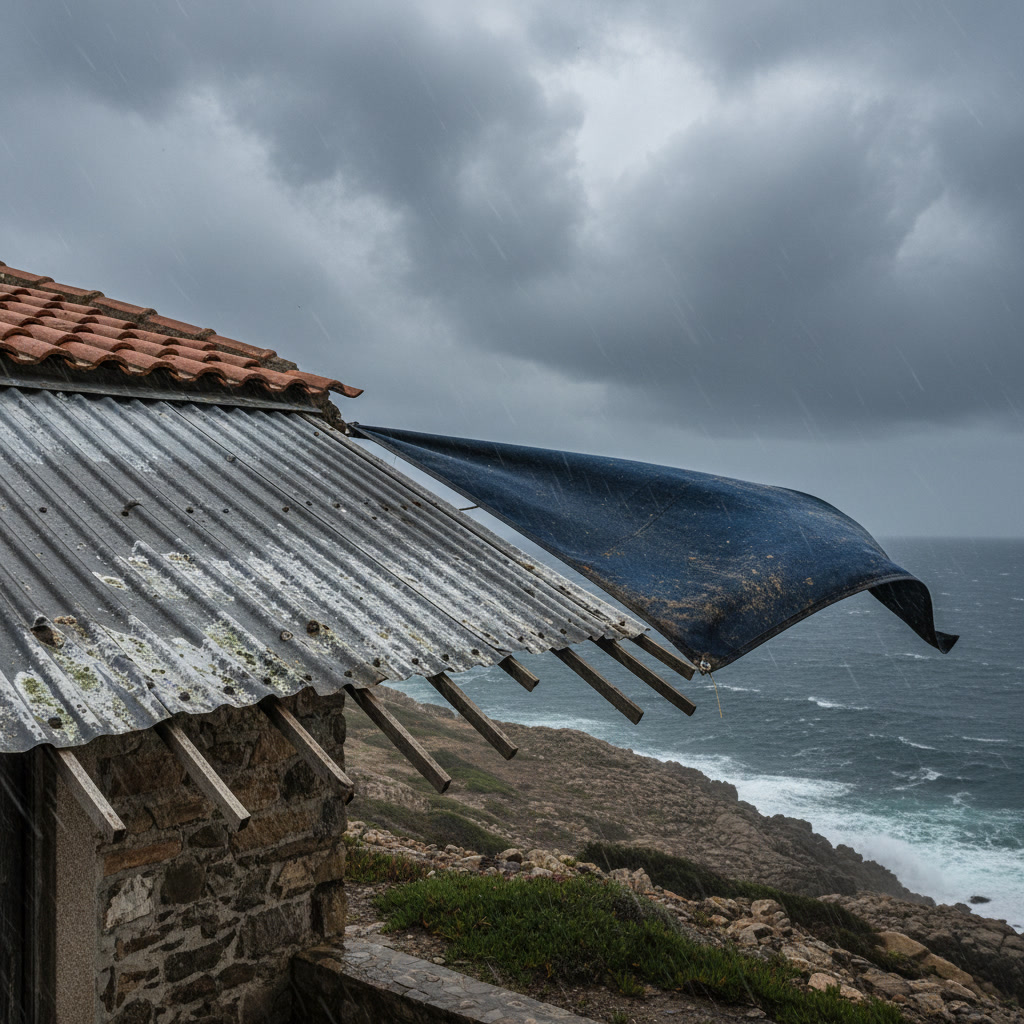
Aluminum awning installation requires solid attachment to structural members, not just exterior trim or siding. The weight and wind load demand through-bolting into rafters, studs, or reinforced blocking. Retrofitting older homes sometimes necessitates structural upgrades to safely support the permanent installation.
Fabric awnings offer more forgiving installation requirements due to lighter weight. However, the tensioning system needs precise adjustment to prevent sagging without overstressing seams. Improper tension causes 60 percent of premature fabric failures, making professional installation worthwhile despite the apparently simpler process.
Both materials benefit from professional assessment of your specific exposure. Homes in open areas face higher wind loads requiring reinforced mounting, while tree-shaded locations deal with more organic debris and moisture. An experienced installer accounts for these factors during specification and installation, preventing problems that emerge months or years later.
Repair Options When Damage Occurs
Aluminum awning repairs typically involve reattaching panels, replacing damaged sections, or repainting scratched areas. Individual panels can be swapped without disturbing the entire structure. Dents can be filled and refinished to near-original appearance. Most repairs cost $150 to $400 and extend the awning’s service life by years.
Fabric damage usually requires complete replacement rather than repair. Small tears can be patched temporarily, but patches create stress points that promote additional tearing. Faded or mildewed fabric cannot be restored to like-new condition through cleaning or treatment. The all-or-nothing nature of fabric repairs adds to the long-term cost difference between materials.
Storm damage coverage through homeowner’s insurance treats the materials differently. Policies typically cover sudden damage from identifiable events like hail or fallen trees. However, gradual deterioration from weather exposure falls under maintenance, which insurance excludes. Aluminum’s longer lifespan means fewer claims and potentially lower premiums for permanent structures versus temporary installations. Just as with decisions about when to replace patio cover structures, understanding your insurance coverage helps with planning.
Making the Right Choice for Your Home
Select aluminum when you want a permanent solution with minimal maintenance in exposed locations. The material suits full-sun areas, high-wind zones, and properties where the owner plans to stay long-term. Aluminum makes particular sense for commercial properties where replacement disruption and frequent maintenance create operational problems.
Choose fabric when aesthetics, retractability, or budget constraints take priority over maximum longevity. Fabric works well in protected locations with lower wind exposure, seasonal-use homes, or applications where you value design flexibility above durability. Retractable fabric suits homeowners who actively manage their outdoor spaces and will operate the mechanism appropriately.
Consider hybrid approaches that combine both materials. Aluminum main structures with fabric accent panels provide durability where it matters most while retaining decorative options. Some homeowners install aluminum over primary outdoor living areas and fabric for secondary spaces like side entryways where replacement costs matter less.
Protecting Your Investment for Decades
Both aluminum and fabric awnings deliver their full lifespan potential only with proper installation and appropriate maintenance. Aluminum’s 20 to 30 year service life assumes quality materials, professional installation to structural supports, and basic cleaning twice yearly. Fabric’s 5 to 15 year range depends heavily on material grade, retraction during severe weather, and consistent cleaning and treatment.
The choice between materials ultimately depends on your priorities, budget, and willingness to maintain the installation. Aluminum costs more initially but less over time, requires minimal attention, and handles Arkansas weather extremes without complaint. Fabric offers design flexibility and lower entry costs but demands regular care and eventual replacement.
Herber Springs Awning and Home Improvements brings 25 years of experience helping homeowners select and install the right awning materials for their specific situations. Our team understands how Central Arkansas weather affects both aluminum and fabric options, and we install both types to professional standards that maximize their service life. If you’re ready to add lasting weather protection and shade to your home, contact us at +1 501-362-3727 to discuss which awning material best fits your needs and budget.