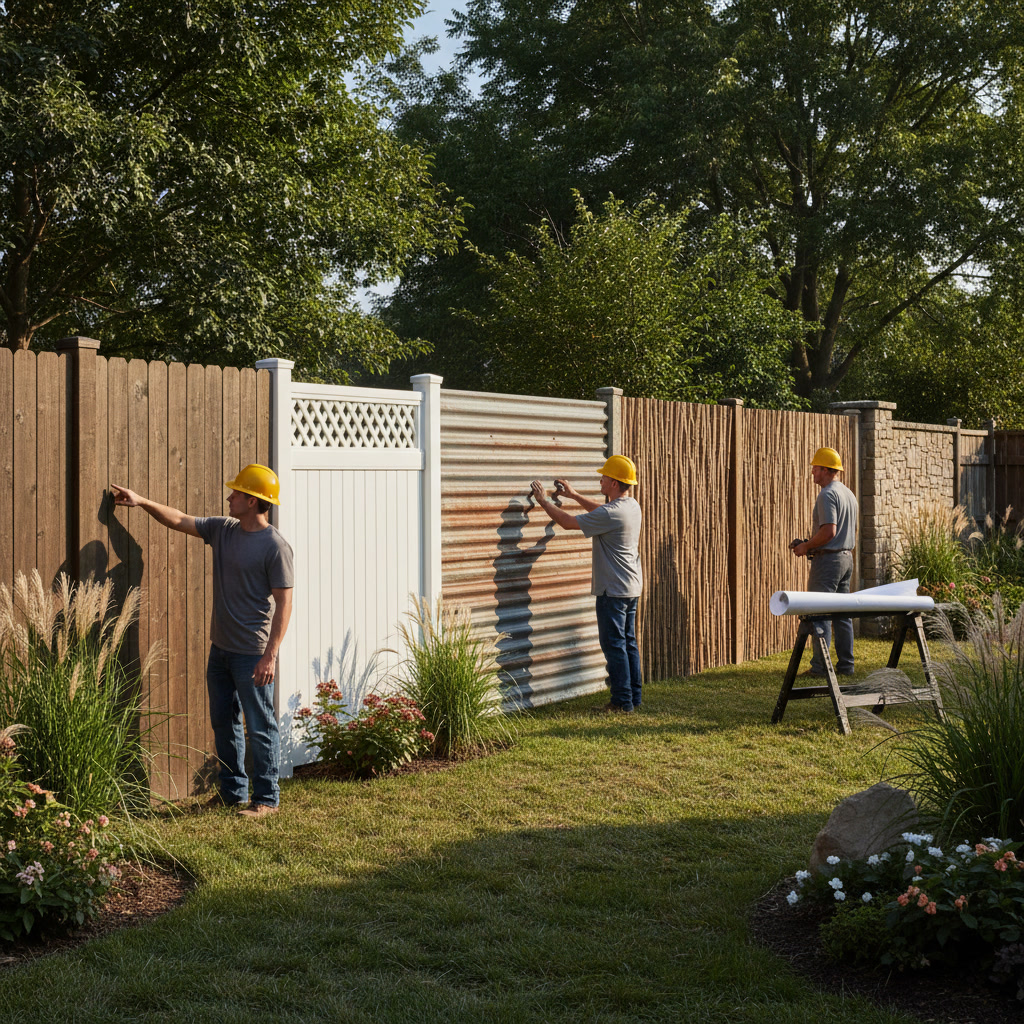
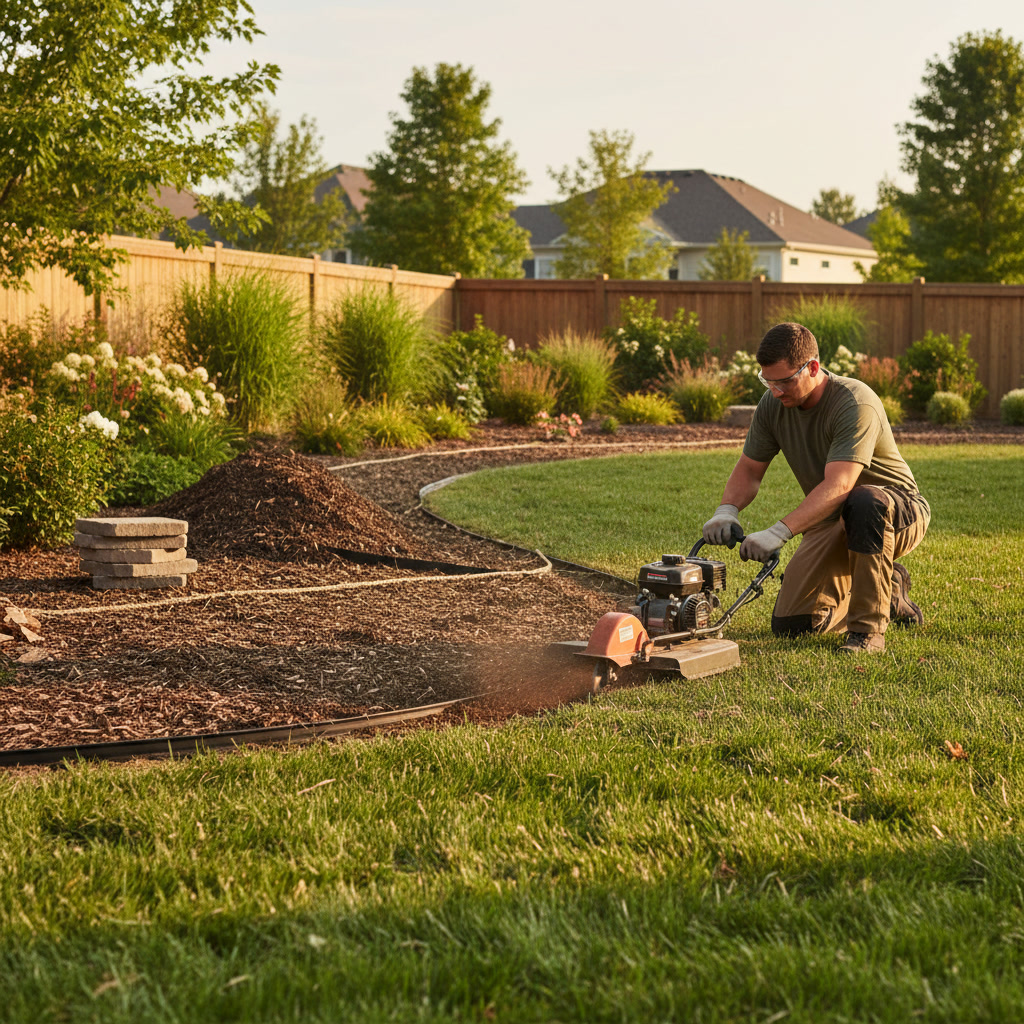
Landscape outliners create permanent, professional-looking borders between grass and garden beds through continuous concrete edging that prevents grass intrusion and defines outdoor spaces with clean lines that last decades. Understanding how landscape outliners work helps property owners make informed decisions about upgrading their yard aesthetics. The process involves excavating a narrow trench along your desired border line, installing forms or guides, and pouring specially formulated concrete that cures into a durable, maintenance-free barrier.
Why Traditional Edging Methods Fall Short
Plastic edging strips buckle and heave with freeze-thaw cycles, creating uneven borders that collect debris and allow grass to creep through gaps. Metal edging rusts over time and develops sharp edges that pose safety hazards, particularly around areas where children play. Brick or stone borders shift when soil settles, creating maintenance headaches that require annual adjustment.
Wood timbers rot within three to five years in Arkansas humidity, forcing homeowners to repeat the installation process and spend money on replacement materials. These temporary solutions also require regular trimming around edges because grass roots grow underneath and through gaps, defeating the purpose of border definition.
The Permanent Solution Landscape Edging Provides
Continuous concrete edging eliminates the weaknesses of segmented borders by creating an unbroken barrier that grass cannot penetrate. The material bonds directly to the soil below grade, anchoring itself against frost heave and preventing the shifting that plagues traditional methods. This permanence means you install it once and maintain your clean borders for 20 to 30 years or longer.
The concrete mixture used in professional landscape outlining contains additives that increase flexibility and reduce cracking, even when temperatures fluctuate dramatically. This engineered approach to landscaping ensures your investment withstands Arkansas weather patterns without the constant upkeep other materials demand.
The Installation Process Step by Step
Professional installation begins with marking the desired border path using spray paint or stakes and string. This planning phase accounts for drainage patterns, tree root zones, and the natural flow of your landscape design. Curved lines create visual interest, while straight edges complement architectural features of your home.
Crews then excavate a trench approximately four inches deep and four inches wide along the marked line, removing grass and roots that would interfere with proper adhesion. The trench depth positions the edging partially below grade, which prevents the mower from striking the top edge and creates a clean appearance at lawn level.
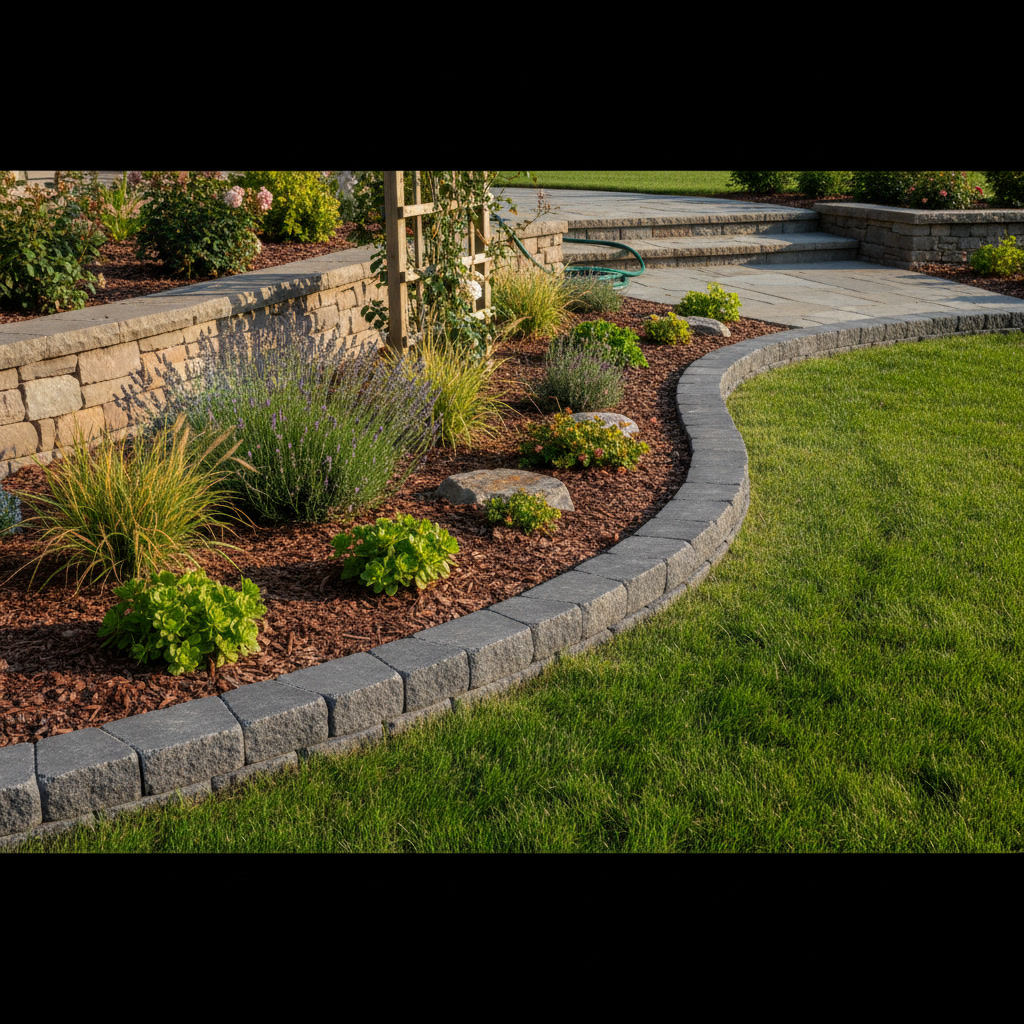
The concrete mixture flows into the trench while installers use forming tools to shape the top profile and smooth the finish. Most installations create a rounded or beveled top edge that guides mower wheels safely past the border. Color additives can match or contrast with surrounding hardscape elements, giving you design flexibility beyond plain gray concrete.
Curing takes 24 to 48 hours before the edging reaches full strength, though light foot traffic is possible after just a few hours. Professional crews backfill against the edging and compact the soil to eliminate air pockets that could cause settling.
Design Options for Custom Yard Borders in Herber Springs
Height variations serve different functional purposes throughout your landscape. Standard four-inch exposed height works well for most garden bed borders, while taller six-inch profiles create stronger visual separation for flower beds against lawn areas. Lower two-inch heights define spaces without creating a pronounced barrier, useful around tree rings where you want subtle definition.
Color choices extend beyond natural concrete gray to earth tones that blend with mulch or stone, or darker shades that create bold contrast. Some property owners in Herber Springs match their edging color to home exterior trim or existing patio materials, creating a coordinated outdoor design.
Texture finishes range from smooth and contemporary to stamped patterns that mimic natural stone or brick. The smooth finish simplifies cleaning and prevents debris accumulation, while textured surfaces add visual interest to larger landscape projects.
How Landscape Borders Prevent Maintenance Problems
The physical barrier stops grass runners from invading mulched beds, eliminating the weekly task of trimming bed edges with a spade or string trimmer. This separation keeps mulch contained within beds rather than scattering across the lawn during mowing or heavy rain. Property owners typically save three to five hours monthly on edge maintenance after professional edging installation.
Water management improves because the raised border directs runoff toward planned drainage paths instead of allowing it to sheet across undefined boundaries. This controlled flow reduces erosion in mulched beds and prevents soil loss that creates low spots requiring annual topdressing.
Material Durability Compared to Alternative Border Types
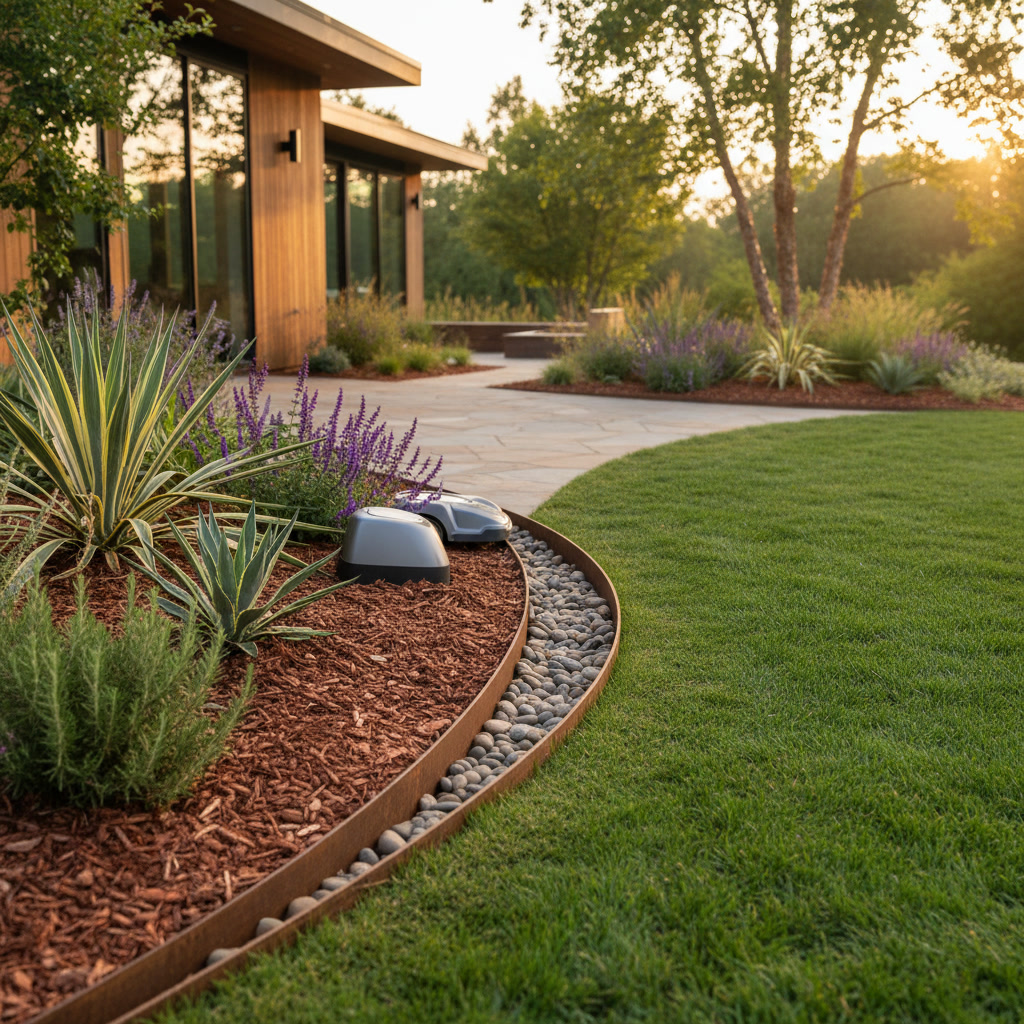
Concrete landscape edging resists UV degradation, insect damage, and chemical breakdown from fertilizers or herbicides. Plastic alternatives become brittle after three years of sun exposure and crack when temperatures drop below freezing. Steel edging corrodes when exposed to irrigation water and lawn chemicals, weakening structural integrity within five to seven years.
Natural stone borders require periodic releveling as ground movement shifts individual pieces, and weeds grow between stones despite initial installation over landscape fabric. The maintenance cycle for stone borders averages every 18 to 24 months, while concrete edging requires virtually no adjustment once installed.
Wood rot accelerates in contact with moist soil and mulch, particularly in areas with poor drainage or heavy shade. Even pressure-treated lumber degrades faster than concrete in landscape applications because ground contact exceeds the protection level most treatments provide.
Integration with Other Outdoor Features
Professional landscape edging complements hardscape projects by creating visual continuity between different outdoor elements. Borders can transition seamlessly into walkway edges, patio covers, and foundation plantings, tying your entire landscape together with consistent material and color.
When coordinating multiple outdoor remodeling projects, installing landscape edging early in the process establishes permanent borders that other contractors work around. This sequence prevents damage to newly sodded areas or planted beds during subsequent construction phases.
Edging around water features creates defined boundaries that prevent mulch migration into ponds or fountains. The permanent border also simplifies seasonal cleanup by containing falling leaves within designated areas rather than allowing organic debris to spread across entire yards.
Cost Efficiency Over Time
Initial investment in professional concrete edging runs higher than purchasing plastic strips or wood timbers, but the elimination of replacement costs shifts long-term economics strongly in favor of permanent borders. A typical yard requiring 200 linear feet of edging might use $150 in plastic edging every three years, totaling $750 over 15 years, while professional concrete installation costs approximately $800 to $1,200 one time with no replacement expenses.
Labor savings compound these material cost differences because property owners avoid annual or bi-annual reinstallation projects. The time invested in removing deteriorated edging, purchasing replacement materials, and reinstalling new borders every few years exceeds 20 hours over a decade, valued at hundreds of dollars even at modest hourly rates.
Reduced landscape maintenance lowers ongoing care costs by minimizing edge trimming time and decreasing mulch replacement needs. Clean borders prevent mulch from washing into grass where it creates brown spots requiring overseeding or sod repair.
Proper Installation Techniques That Ensure Longevity
Soil compaction beneath the edging prevents settling that creates uneven borders or gaps at ground level. Professional installers compact the trench bottom before pouring concrete, eliminating voids that trap water and contribute to frost heave in winter months. This preparation step makes the difference between edging that lasts three decades and installations that crack within five years.
Proper concrete mixture ratios balance strength with flexibility, allowing the material to move slightly with soil expansion without cracking. Too much water weakens the final product, while insufficient moisture prevents complete curing and leaves a brittle surface prone to chipping. Experienced installers adjust mixture consistency based on ambient temperature and humidity levels at installation time.
Joint placement at strategic intervals accommodates expansion and contraction without visible cracking. These control joints appear every 10 to 12 feet along straight runs and at directional changes where stress concentrates. The joints guide any cracking to predetermined locations where it remains nearly invisible rather than allowing random cracks to develop across visible surfaces.
Climate Considerations for Arkansas Properties
Freeze-thaw cycles in central Arkansas require concrete formulations that resist moisture absorption. Water trapped inside porous concrete expands when frozen, creating internal pressure that cracks the material. Professional-grade landscape edging includes air-entraining additives that create microscopic air pockets, giving expanding ice room to grow without damaging the surrounding concrete matrix.
Summer heat exceeding 95 degrees requires special curing procedures to prevent rapid moisture loss that weakens surface layers. Installers may apply curing compounds or cover fresh edging with plastic sheeting to retain moisture during the critical first 48 hours. This attention to weather conditions during installation directly impacts the 20- to 30-year lifespan quality edging achieves.
Heavy clay soils common throughout the region expand when wet and contract during drought, creating movement that inferior edging cannot withstand. The below-grade installation depth anchors professional landscape borders against this soil movement, while the flexible concrete mixture accommodates minor shifts without structural failure.
Achieving Professional Results That Last
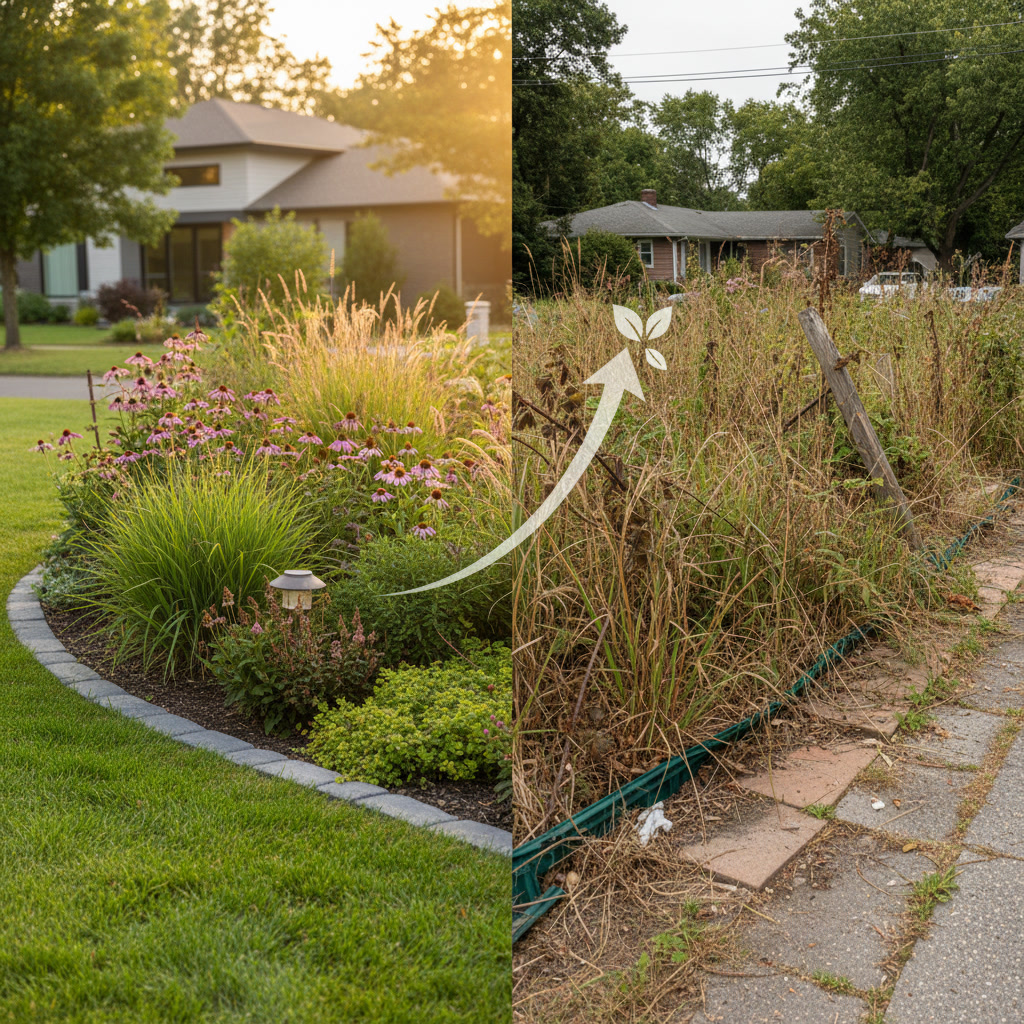
Quality landscape edging transforms ordinary yards into well-defined outdoor spaces that appear professionally maintained year-round. The clean lines separate functional zones, guide foot traffic, and create visual interest through curves and height variations that complement your home’s architecture. Property owners gain these benefits without ongoing maintenance demands that consume weekends and drain budgets.
The investment in professional installation pays dividends through decades of maintenance-free borders that preserve the definition you establish today. Properly installed landscape outliners eliminate the frustration of shifting borders, grass invasion, and constant edge trimming that plague yards relying on temporary solutions.
Herber Springs Awning and Home Improvements brings 25 years of experience to every concrete landscape edging project, ensuring your borders receive the preparation, materials, and installation techniques that deliver lasting results. Our team serves properties throughout central Arkansas with the expertise that transforms landscape visions into reality. Contact us at +1 501-362-3727 to discuss how professional landscape edging can enhance your property’s appearance and reduce maintenance time.